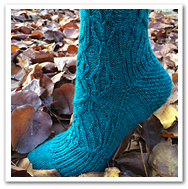
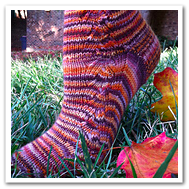
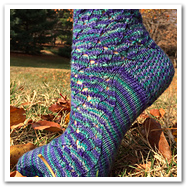
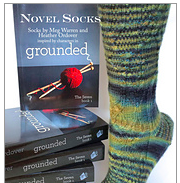
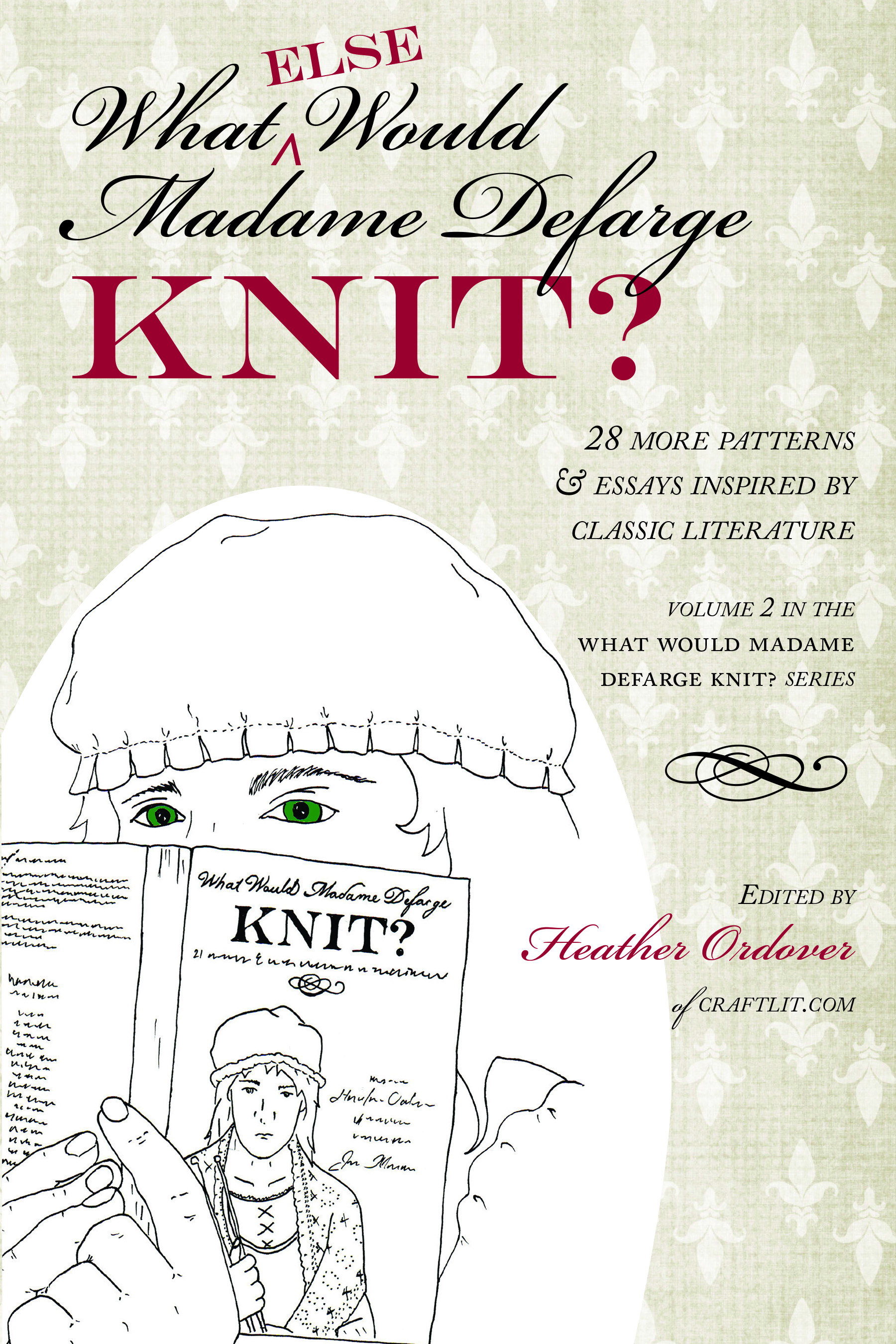
I am the author of Grounded and the editrix of the What Would Madame Defarge Knit? series of knit (and crochet) pattern books where the patterns are based on characters from classic literature.
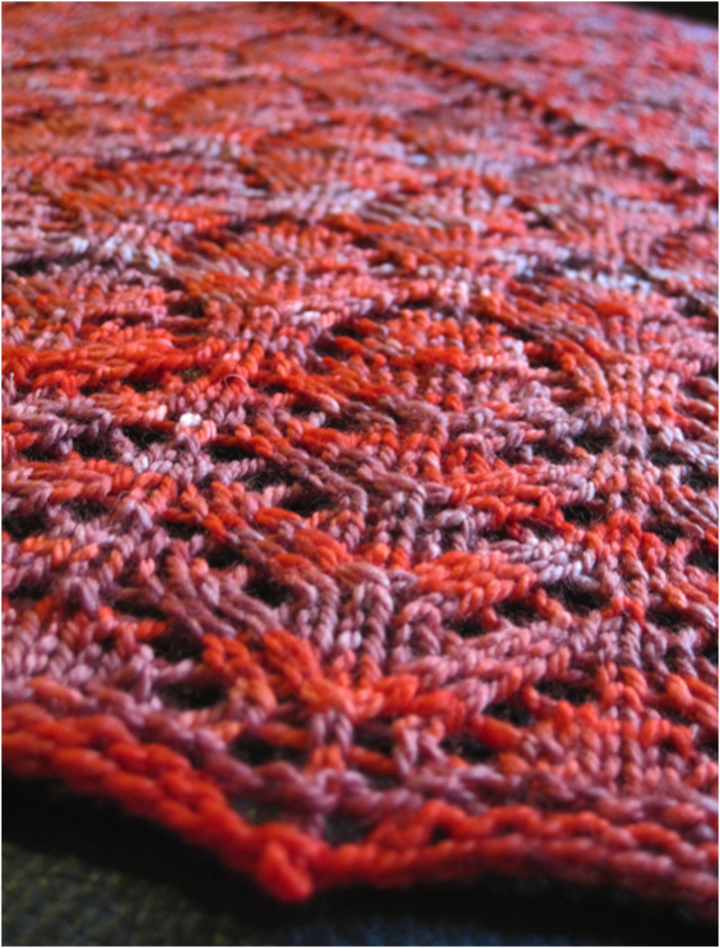
New KAL for you—Chrissy Gardiner (of sock fame and lore) is going to host our first What Would Madame Defarge Knit? Knit-a-Long! We’ll be starting with her gorgeousWilhelmina Shawlette—a pattern that shouldn’t intimidate anyone, it’s a shawlETTE after all. And if you’re not a lace knitter (ahem, yet) fear not. This is an EXCELLENT pattern to start with.
There have already been discussions about expanding the pattern or changing the yarn—Chrissy will answer all your questions. Fear not! She is kind and gentle and good.
And a wicked good designer.
KAL starts this weekend, September 24th. Our winner will be chosen randomly from those who finish and post their pix to the Ravelry group (if you’re not on Rav yet, now’s a good time to join!).
And, if you’d like, a button for you!
Grab a button or get more from CraftLit’s
If you’re reading this post on 9/11/2011 then I’m probably wandering somewhere near Ground Zero while your eyes are skimming the page. I had a book signing event yesterday but I wrote this days and weeks ago and set it to automatically post at 8am today. I didn’t want to miss today even if I’m not at my computer.
• • •
10 years ago, at 8am, the world was a different place. My students were different people. I was different too.
Prior to 9/11 I’d been through a couple of things that left post-traumatic scars—things I don’t really want to go into on a blog—so 9/11 wasn’t unfamiliar psychological territory to me. But it was unfamiliar to so, so many others who were also far too close to those buildings.
For those of you who are new to my blog or my story, I wasn’t far away at Stuyvesant (though you’d think they were much closer than they were, the way the papers went on about them). But I also wasn’t in the buildings themselves, skittering down the stairs while the firemen went up, up, up.
I was at a small, unimposing, city high school—The High School for Leadership and Public Service—about a half city block south of the South Tower. The only school closer to the Towers was our next-door neighbor, The School for Economics and Finance. You probably never heard of either of our schools. That’s because our schools were home to “city kids” (that’s secret code for “mostly Black and Hispanic kids”). But you should have heard of our school. It was amazing. Amazing administrators. Amazing staff. Amazing kids.
Our kids beat Stuyvesant at Moot Court.
I’m not braggin’.
I’m just sayin’…
Anyway.
We were there.
• • •
I wrote about our 9/11 experience on a blog long before there were blogs. I also wrote about it irregularly here, on or around 9/11 anniversaries.
and this year, after being interviewed by USA Today about moving out of NY after 9/11.
They also made this video
I also have a bunch of posts I started but never published. It’s hard to write about 9/11. Actually, that’s not true. It’s hard to write meaningfully about the day. But I’ll try.
• • •
I was asked by a fellow blogger, Julie at Happy Catholic, if I’d want to add a 9/11 post to a portal she’s a part of and I said yes (it’s not like this is new terrain for me). Then she said, “maybe something about forgiveness” and that stopped me.
Forgiveness?
For 9/11?
You’re kidding, right?
It’s not that I don’t want to… it’s just that I don’t really feel like that’s part of my purview. I didn’t lose anyone close to me. The Towers didn’t fall on me (nearby, sure, but I was in Battery Park when they came down. Other teachers were still in our school building). I have no influence on others’ abilities to forgive nor was I a target that needs to dole out forgiveness. At least, not directly.
But then I thought, no. I actually do have something to say about forgiveness. It relates to my post after the USA Today article came out. I was peeved, really ticked, at the way people flame on blogs and make casually cruel comments on otherwise serious writing—or at least good writing about a serious topic. I was mostly, however, seething at the “oh, get over it” crowd. These are the people who say things like:
“aren’t you past this yet?” after someone miscarries…
“it’s already been a year…” after your father’s death…
“how long are you going to do this to yourself?” when you’re in the middle of PTSD
as if it’s a choice. As if any emotional reaction is a choice.
There’s a forgiveness gene or maybe an empathy gene that seems to have been switched off somewhere around when Gordon Gecko first reared his ugly head. That’s when I first noticed it, anyway. I can’t guarantee anyone felt more civil before that, but they sure as heck acted more civilly before that. Me? I’d like to be surrounded by a little more acting every once in awhile. I don’t much care how folks feel—and you can’t really change that anyway—but we can expect certain behaviors from civil society (or at least Miss Manners thinks so).
I’m pleasantly impressed with the site GoodReads and the way it lets you establish tone in book groups. Once those things are out in the open, once expectations are stated, folks seem to have little difficulty living up to them. Maybe it’s that GoodReads is full of real names and thus we aren’t all just faceless ciphers. Dunno, but I do know that it’s a relief to visit a site that’s got some class.
So this is my 9/11 point—in those sleepwalking days following the attacks, New York was a subdued place, but a timidly hopeful one. I recall taking a lot of time to talk to neighbors on the stoop (since we had no school to go back to at first), walk through Prospect Park, play with my son, and talk to everyone from my school I could get a hold of—reliving the day, identifying where everyone was, making sure we were all still here. All safe. All okay.
Because the best we could hope for was okay.
And we all wanted the country to be okay too. I know my friends and I spoke a lot about how the aftermath could be turned into a positive—
Maybe they’ll encourage everyone to plant victory gardens? Shared sacrifice? Support the troops?
I guess that about wraps it up for oil. Maybe now we’ll get some clean energy!
Maybe now they’ll finally start putting real money behind improving train lines. It’s more civilized to go by train anyway (and they can’t take down a building with a train!).
Maybe we’ll be able to keep this civil tone in politics now.
But that isn’t what happened.
None of that happened.
At best, we were encouraged to go shopping.
No sense of “we’re all in this together†lasted past the occasional “We’re all New Yorkers Now†bumper stickers. No one (with the possible and very local exception of Rudy Giuliani) worked to draw people together to support one another, to see ourselves in the faces of those who lost loved ones, to acknowledge any sense of “there but for the Grace of God…†And to me, that’s a sadly missed opportunity. We had a chance to get our empathy gene back… and we blew it.
The last ten years have found our country more divided than we have been since the Gilded Age—divided politically as well as economically. I hear people screaming. I hear lots of people judging. I hear lots of vitriol and nastiness and pain.
But I never hear it from real people.
The actual people I know—whether we agree or disagree politically—are all kind, gentle, generous folks who are trying hard to make a good life for their families against ridiculous economic and societal odds. Everyone I know works day and night to make sure their kids are safe, well-educated, well-fed, and as decently socialized as you can expect to be in our world. I don’t know anyone who’s pro-abortion any more than I know someone who’s anti-choice. Those aren’t our words. Those are words that have been put in our mouths through sound bites and media machines.
And, lest I come off as another judge-y voice, I know media people too—and they’re working just as hard to be good and make things better as we are. Maybe even harder.
I think that’s the important thing. None of these people are bad. Or evil. Or unworthy of my sympathy, empathy, or time. Even if we don’t agree on everything, these people I know?—these are good people.
Pogo said, rather famously, “We have met the enemy and he is us.â€
There’s a “dead hand†that pushes us along, riling folks up about conspiracies that don’t exist, evil that isn’t out there, and threats that aren’t even at the level of pipe dreams. But they get repeated in the echo chamber that is our 24/7 news environment. And we hear. And as we hear, we believe. And then it filters down, this casual cruelty we ingest from the variously polarized news venues. It filters down until we believe it’s okay
for us to judge those who are mourning
for us to judge the poor (the parents of my students were working many jobs—read Nickled and Dimed)
for us to judge families who are wrestling with a family member who is mentally ill or struggling with addiction
for us to judge how people live their lives, in their homes, away from our line of vision
for us to judge how other people do their jobs, especially when we’ve never held that job ourselves
and the more we judge, the more we believe we’re right, the louder we get, the less we listen.
I never learned anything from talking loudly (though, G-d knows, I’ve tried).
So that’s my forgiveness message to everyone and to myself too (because I’ve been as guilty as the next). Let’s give everyone a pass, shall we? Let’s assume the best—that we’re all doing the best we can with the odds stacked against us. Let’s find a way to be a little more generous of spirit and understanding and, yes, forgiving of one another’s choices.
To those who are still grieving 9/11 and it’s aftermath, I give you my prayers for peace. You are not harpies. You are not weak. You are you, and you are doing the best you can. To those who are grieving about, well, anything at all, I hope beyond hope that the people who surround you give you the space and grace you need to heal. It is a process; G-d only knows how long it will take. It’s not up to us to judge.
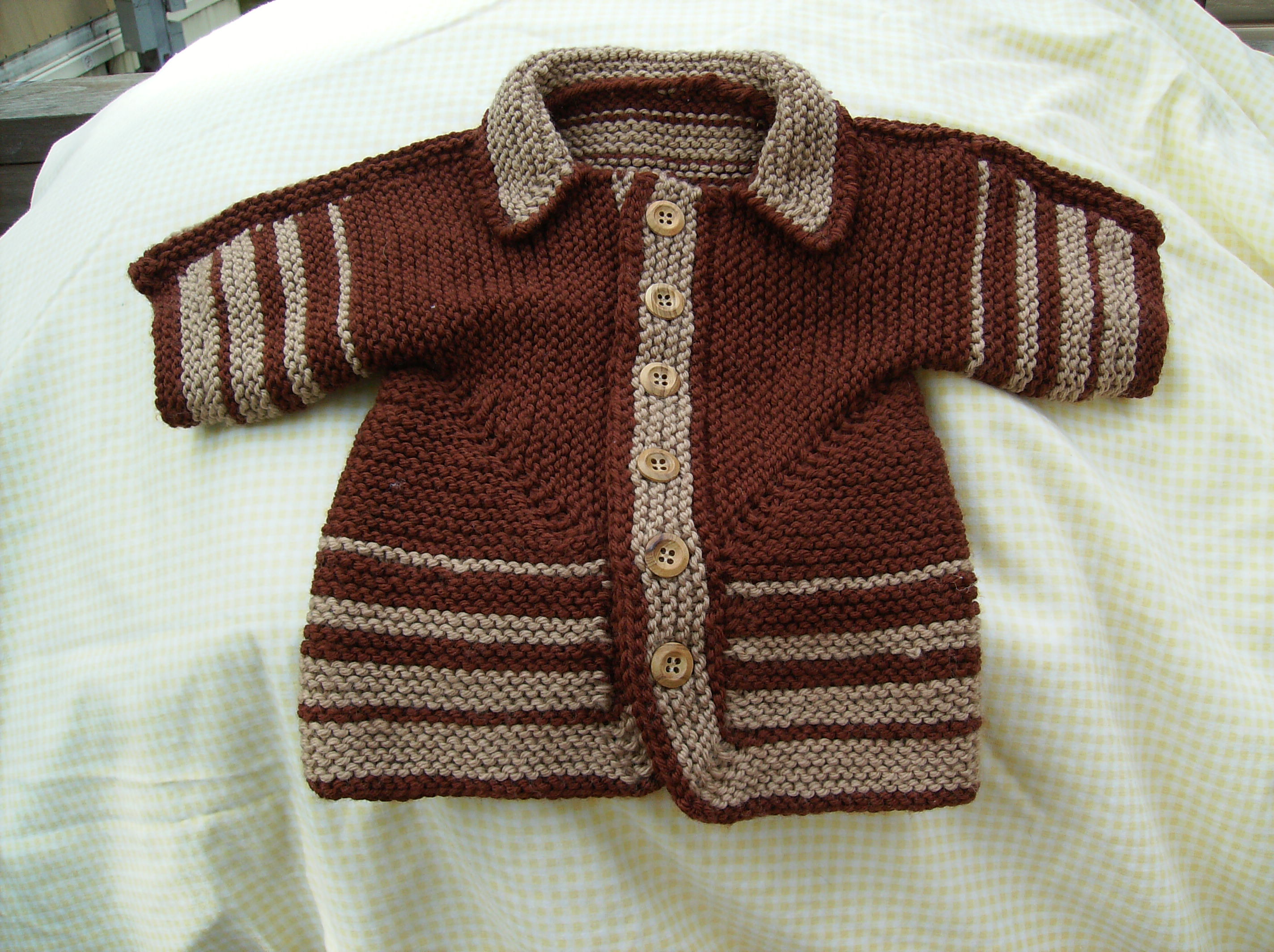
I made a BSJ (that’s Baby Surprise Jacket if you haven’t made one yet) for my little niece.
It was definitely a surprise, mostly because of how odd it looked. Here, let me show you.
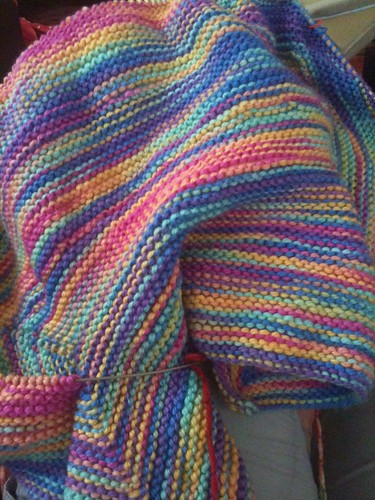
See? Giant blob o yarn.
Well, once I finished I decided to take pictures of the folding process.
First, the primordial blob.
Now, at the top you’ll see button holes. That’s one side of the front. You can see a sleeve trying to form there, too, pointing up and to the left slightly.
And there, down at the bottom of this next pic you can see the same.
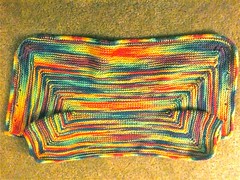
Okay, overview pic. You can see button holes right and left edges, but see how nicely turned the upper right and left corners are? That’s because those are actually the bottom of the button bands–actually the bottom of the sweater. Remember, for me, it was a blob. This is me figuring out what the heck I’m looking at, so I didn’t rotate any pix. Yours may look equally odd.
So, since the sleeves were trying to assert themselves at the top of the button hole edges and had to be opposite the nicely rounded bottom edges (I did an attached I-cord all the way around)
Now I put my hands at the top middle and the bottom middle (between the nicely rounded edges and between the burgeoning sleeves) and I lifted the sweater to fold it in half. Top of this picture you can again see button holes and now you can clearly see a sleeve pointing north.
I rotated the whole thing, opened it, adjusted those button hole areas to overlap and VOILA! SURPRISE!!!
Now, HOW La Zimmerman figured that out is a mystery. And for me, having that I-cord band to hide the seaming of the shoulders was just spectacular. Howevvah. I’m not a real fan of the garter stitch thing. I like flat. I like sleek. I’m not so much into the bumpy thing.
I mentioned this on the podcast and IMMEDIATELY got these words of warning from Lee:
Heather:
The stockinette BSJ does not work. I made one and it comes out slightly deformed. Remember, garter stitch is square but stockinette stitch is not.
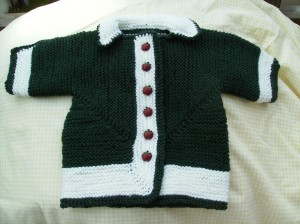
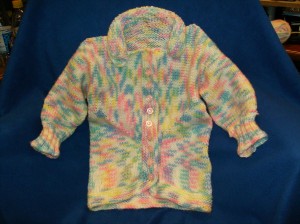
Attached are 3 photos. 1 Stockinette BSJ and 2 regular BSJ’s. You’ll see what I mean.
I’m including her pix below (you can see more of her handiwork at sereneknitter.blogspot.com. See how perfect the first two are? And the third, in stockinette…not so much.
I am not a fast knitter.
Seriously, I’m not. Yes I knit Continental, which is supposed to be faster, but as far as I can tell this makes me a more secure knitter (in that I can knit and purl without looking at my hands).
I realized I wasn’t a fast knitter when Wendy test knitted the Madame Defarge Stole for me and went faster than I could get instructions to her.
She’s FAST.
Drops shawl, which I am not knitting quickly
From time to time I try to focus on speed—when knitting something simple—and I suppose I speed up a bit, but mostly I just knit as I knit. I can switch back and forth between Continental and British and (on the knit stitches at least) I really don’t see much speed difference. Sometimes I wonder if it’s because I was originally taught British. Mostly I don’t wonder at all. While it would be nice to go faster, most of the time I don’t mind. Right now, though, while I’m busy busy busy and designing a lot more than I used to, it would sure be nice to go faster.
What do you do?
Have you sped up?
Do you have useful links?
I’m really curious to find out how other knitters have dealt with this…or IF you have.
I prepared to teach classes as I drove across the country with the kids
I saw a couple of movies
I knitted
I painted
I rarely slept.
The thing that kept getting pushed aside was blogging.
To try to amend that, however, I’m going to be audio-blogging from the road. I’ve started the pre-trip blogging and those files–plus all the new ones from the road, can be seen below. It’ll just have to do until I get to the new digs.
I’ll be testing ways to legitimately blog from the road, but my breath isn’t held. It was disastrous last time. Maybe technology has caught up to me by now.
Fingers crossed!
Along with the “How to Crochet” page I put up a bit ago—with the best video tutorials I found—I wanted to add Continental and British knitting tutorial videos to the mix.
Before I go any further, and because I know folks have opinions about these things, I want to put out there that I knit both British and Continental. My Grandmother taught me British when I was little, and later when I picked the craft back up as an adult I re-taught myself Continental. (Well, not just Continental, but Combination Knitting, just like Annie Modesitt (who has free online knitting classes)… only I didn’t write a book about it.[1])
All of that is a long way of saying I have no personal bias. I knit Continental most of the time, but I think that’s because I spent so many of my non-knitting years neck deep in crochet and thus holding the yarn with my left hand feels comfortable. If I do color work I knit both ways at the same time, and there are some needle and yarn sizes that simply require me to knit British.
So.
What the heck are Continental and British?
Continental Knitting has you hold your working yarn in your left hand (and generally that means you’re manipulating the yarn with your left and the needle with your right). British has you hold your working yarn in your right hand (and generally that means you’re manipulating the yarn and one needle with your right). These, however, are not hard and fast rules. I’ve seen Continental knitters carry the yarn in their left but manipulate it with their right. It’s pretty cool. And ditto that in reverse for British.
All that is a long way of saying: if you’re doing something that looks like knitting and find that you’re making some kind of fabric and aren’t twisting your stitches, then you’re doing just fine. Unless someone can show you how you’re twisting something up, don’t let them tell you you’re doing it “wrong.”
Now, on with it!
Knitting is the process of making a series of slip knots but instead of making them in a chain (crochet) you’re making a loop and catching each loop on a needle. All those stitches on the needle are “live” and if you pull them off the needle and tug the yarn they’ll all rip out. Prrrrrrrrrrrrt!
Lesson?
Don’t pull your stitches off the needle unless you know what you’re doing.
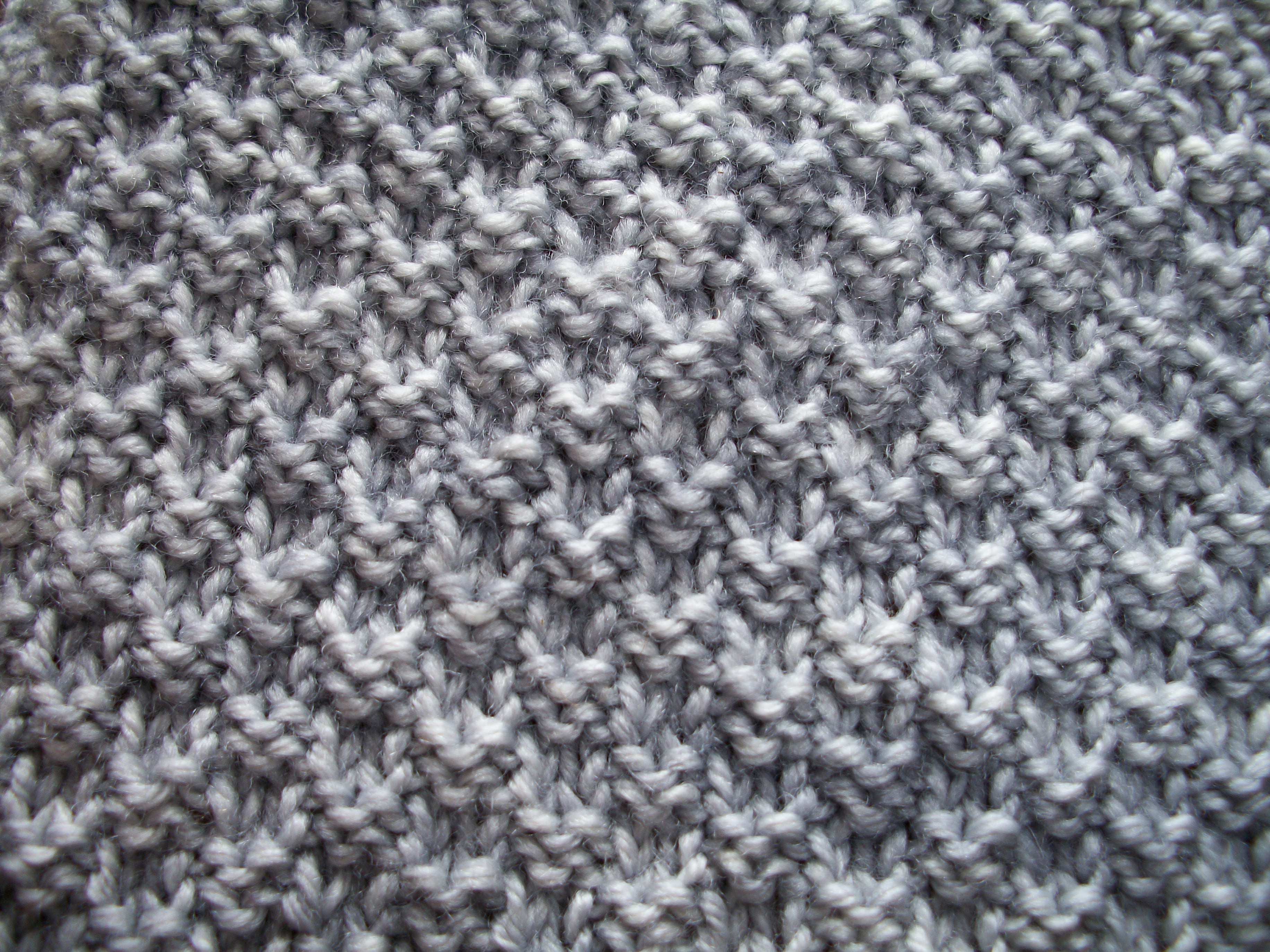
There are two ways to look at knitted fabric, the flat side and the bumpy side. If you make a KNIT stitch, you’ll have the “flat” side facing you. This will look like “regular knitting” that you might see in a standard sweater you buy at a store.
If you turn that fabric over, you’ll see that the back side of the knit stitches is bumpy. That means you need to learn how to knit the flat “front” side and the bumpy “back” side. Those stitches are called “knit” (flat) and “purl” (bumpy).
Every move in knitting begins with either a knit stitch or a purl stitch. So, once you master these two stitches there is NOTHING you cannot do. Interweave just came out with this nifty little (free) eBook on how to knit, too. NAYY*
I’m a visual learner, so I’ve dug around to find the clearest videos I could. PLEASE feel free to put links to other good videos into the comments on this page UPDATE: In fact, drop down to the comment from Alix F. She found better videos! The Knit Stitch
The Purl Stitch
If you want flat knitting (not bumpy) then you will knit one row (often called the “right side”) then turn your knitting and purl back down to where you started (often called the “wrong” or “back side”). This is called “Stockinette Stitch.”
If you want bumpy knitting, use the knit stitch no matter which side you’re on. This is called “Garter Stitch.”
All of that is well and good, but you can’t practice if you can’t cast-on—that’s how you get the yarn on the needle to begin with. There are MANY ways to cast-on. I’ve linked here to two. The first video is the most common as it gives you a solid, generally stretchy cast-on row. The second requires less fiddling with the yarn initially, but it can make for a very loose cast-on which may look a bit baggy when you’re done. Long Tail Cast-on
Backwards Loop Cast-on
And when you’re done, you’ll need to get the blasted thing off of your needle! For that, you need a bind off.
And now?
You can knit!
The only other things you need are to know how to increase and decrease. I found a page with very good tutorials on that, so I’ll just link you to them. And if the videos I’ve posted here don’t float your boat, please don’t despair. There have to be a metric ton of tutorials and videos out there. Poke around. I know you’ll find one that works for you. And don’t be embarrassed to go to your local yarn store. Buy some cheap yarn and needles, then plop yourself down and have them teach you. They will.
In honor of Charles Dickens birthday, we wrote a book!
Perhaps—as his expression makes clear—he was hoping for a different type of book?
Regardless, What Would Madame Defarge Knit? goes into pre-orders today and will soon be in your hands, on your Kindle, your Nook, your iPad, your iPhone… you get the idea. (more…)
Along with the “How to Crochet” page I put up a bit ago—with the best video tutorials I found—I wanted to add Continental and British knitting tutorial videos to the mix.
Before I go any further, and because I know folks have opinions about these things, I want to put out there that I knit both British and Continental. My Grandmother taught me British when I was little, and later when I picked the craft back up as an adult I re-taught myself Continental. (Well, not just Continental, but Combination Knitting, just like Annie Modesitt (who has free online knitting classes)… only I didn’t write a book about it.[1])
All of that is a long way of saying I have no personal bias. I knit Continental most of the time, but I think that’s because I spent so many of my non-knitting years neck deep in crochet and thus holding the yarn etc in my left hand feels comfortable. If I do color work I knit both ways at the same time, and there are some needle and yarn sizes that simply require me to knit British.
So.
What the heck are Continental and British?
Continental Knitting has you hold your working yarn in your left hand (and generally that means you’re manipulating the yarn with your left and the needle with your right). British has you hold your working yarn in your right hand (and generally that means you’re manipulating the yarn and needle with your right). These, however, are not hard and fast rules. I’ve seen Continental knitters carry the yarn in their left but manipulate it with their right. It’s pretty cool. And ditto that in reverse for British.
All that is a long way of saying: if you’re doing something that looks like knitting and find that you’re making some kind of fabric and aren’t twisting your stitches, then you’re doing just fine. Unless someone can show you how you’re twisting something up, don’t let them tell you you’re doing it “wrong.”
Now, on with it!
Knitting is the process of making a series of slip knots but instead of making them in a chain (crochet) you’re making a loop and catching each loop on a needle. All those stitches on the stick are “live” and if you pull them off the needle and tug the yarn they’ll all rip out. Prrrrrrrrrrrrt!
Lesson?
Don’t pull your stitches off the needle.
There are two ways to look at knitted fabric, the flat side and the bumpy side. If you make a KNIT stitch, you’ll have the “flat” side facing you. This will look like “regular knitting” that you might see in a standard sweater you buy at a store.
If you turn that fabric over, you’ll see that the back side of the knit stitches is bumpy. That means you need to learn how to knit the flat “front” side and the bumpy “back” side. Those stitches are called “knit” (flat) and “purl” (bumpy).
Every move in knitting begins with either a knit stitch or a purl stitch. So, once you master these two stitches there is NOTHING you cannot do.
I’m a visual learner, so I’ve dug around to find the clearest videos I could. PLEASE feel free to put links to other good videos into the comments on this page. The more information, the better. The Knit Stitch
The Purl Stitch
If you want flat knitting (not bumpy) then you will knit one row (often called the “right side”) then turn your knitting and purl back down to where you started (often called the “wrong” or “back side”). This is called “Stockinette Stitch.”
If you want bumpy knitting, use the knit stitch no matter which side you’re on. This is called “Garter Stitch.”
All of that is well and good, but you can’t practice if you can’t cast-on—that’s how you get the yarn on the needle to begin with. There are MANY ways to cast-on. I’ve linked here to two. The first video is the most common as it gives you a solid, generally stretchy cast-on row. The second requires less fiddling with the yarn initially, but it can make for a very loose cast-on which may look a bit baggy when you’re done. Long Tail Cast-on
Backwards Loop Cast-on
And when you’re done, you’ll need to get the blasted thing off of your needle! For that, you need a bind off.
And now?
You can knit!
The only other things you need are to know how to increase and decrease. I found a page with very good tutorials on that, so I’ll just link you to them. And if the videos I’ve posted here don’t float your boat, please don’t despair. There have to be a metric ton of tutorials and videos out there. Poke around. I know you’ll find one that works for you. And don’t be embarrassed to go to your local yarn store. Buy some cheap yarn and needles, then plop yourself down and have them teach you. They will.
MamaO is Heather Ordover, author, designer, mother and knitter... not necessarily in that order. You can get posts from this blog sent directly to your inbox by signing up below, Follow her on Twitter and Like her on Facebook if you're feeling friendly-like. Follow @MamaO















 MamaO is Heather Ordover, author, designer, mother and knitter... not necessarily in that order. You can get posts from this blog sent directly to your inbox by signing up below, Follow her on Twitter and Like her on Facebook if you're feeling friendly-like.









 Visit HOrdover's Craftsy Pattern Store »